Advanced pharmaceutical bulletin. 16(1):8-17.
doi: 10.34172/apb.025.45993
Systematic Review
Pharmacological Therapies for Bowel Dysfunction After Colorectal Cancer Surgery: A Systematic Review
Alimohammad Bananzadeh Conceptualization, Data curation, Methodology, Project administration, Supervision, Validation, Writing – review & editing, 1, 2 
Seyed Matin Emami Data curation, Methodology, Writing – review & editing, 1, 3
Seyed Mohammad Kazem Tadayon Data curation, Methodology, Writing – review & editing, 1, 4
Neda Najib Pour Data curation, Methodology, Writing – review & editing, 5
Sara Shojaei-Zarghani Conceptualization, Data curation, Methodology, Project administration, Supervision, Validation, Writing – original draft, Writing – review & editing, 1, *
Seyed Vahid Hosseini Data curation, Methodology, Writing – review & editing, 1
Author information:
1Colorectal Research Center, Shiraz University of Medical Sciences, Shiraz, Iran
2Laparoscopy Research Center, Shiraz University of Medical Sciences, Shiraz, Iran
3School of Medicine, Shiraz University of Medical Sciences, Shiraz, Iran
4Faghihi Hospital, Shiraz University of Medical Sciences, Shiraz, Iran
5Medical Faculty in the Department of Surgery, College of Medicine, University of Saskatchewan, Saskatchewan, Canada
Abstract
Introduction:
Bowel dysfunction frequently occurs in colorectal cancer (CRC) patients following sphincter-preserving surgeries. This review systematically evaluated the evidence on pharmacological therapies for this complication.
Methods:
A systematic search was conducted in PubMed, Web of Science, and Scopus in November 2024. Experimental or quasi-experimental studies examining the effects of conventional pharmacological therapies and herbal medicine on stable CRC patients with post-surgical bowel dysfunction were included.
Results:
Among 8,989 retrieved records, eight studies were eligible. These investigated the effects of serotonin type 3 receptor antagonists (n=3), herbal medicines (n=2, specifically Daikenchuto and modified Baizhu Shaoyao San), diazepam (n=1), Botulinum A toxin injection (n=1), and topical phenylephrine (n=1). Except for phenylephrine, interventions showed varying improvements in stool frequency, incontinence, urgency, or quality of life. Most of the included studies exhibited a high risk of bias.
Conclusion:
Some interventions appear promising; however, the current evidence is insufficient to guide clinical practice. This review highlights a significant evidence gap and underscores the urgent need for large-scale, rigorous randomized controlled trials to establish definitive therapeutic strategies for this debilitating condition.
Keywords: Colorectal neoplasms, Drug therapy, Fecal incontinence, Low anterior resection syndrome, Systematic review
Copyright and License Information
© 2026 The Author (s).
This is an Open Access article distributed under the terms of the Creative Commons Attribution (CC BY), which permits unrestricted use, distribution, and reproduction in any medium, as long as the original authors and source are cited. No permission is required from the authors or the publishers.
Funding Statement
This study was supported by the Vice-Chancellor for Research and Technology of Shiraz University of Medical Sciences (Code: 31189). The funder had no role in the study design, analysis, decision to publish, or manuscript preparation.
Introduction
According to Globocan statistics, colorectal cancer (CRC) was the third most commonly diagnosed cancer worldwide, with a five-year prevalence of 5.7 million cases in 2022 (colon cancer: 3,333,832; rectal cancer: 2,274,386).1 Surgical resection remains the cornerstone of CRC treatment. Recently, there has been increased interest in sphincter-preserving surgeries as an alternative to methods that result in a permanent stoma for rectal cancer.2 However, several patients—particularly those with lower anastomoses, a previous history of temporary protective ileostomy, and those who have undergone adjuvant or neoadjuvant therapy—experience postoperative bowel dysfunction following these surgeries that poses significant management challenges.3,4 Common symptoms in these patients include fecal incontinence, painful stools, diarrhea, tenesmus, urgency of stool, and incomplete bowel evacuation, which are typically assessed using the Low Anterior Resection Syndrome (LARS) score.5 Furthermore, these patients often experience significant financial strain and a diminished quality of life.6,7 Bowel dysfunction is also reported following colon cancer surgeries.4,8
Due to the increasing survival rates of patients following CRC surgeries, there is a growing interest among researchers and clinicians in identifying strategies to enhance their well-being. Several treatment options have been proposed for managing LARS following CRC surgeries. Dietary modifications and pharmacological interventions are considered first-line treatment strategies, followed by additional approaches such as transanal irrigation and neuromodulation.9 Access to these advanced therapies is often limited, particularly in low- and middle-income countries. Consequently, pharmacological options can significantly impact patient care, warranting a dedicated review of the current evidence for their efficacy. While previous systematic reviews have examined overall LARS treatment strategies,10,11 none have comprehensively focused on available pharmacological therapies. Therefore, this systematic review aimed to synthesize the evidence on pharmacological therapies (both conventional and herbal medicine) for the management of bowel dysfunction following CRC surgeries, assess the quality of the existing studies, identify the knowledge gaps, and to provide direction for future research.
Methods
Search Strategy
The present systematic review study was conducted according to the PRISMA 2020 guidelines and the Cochrane Collaboration Handbook for Systematic Reviews of Interventions.12 The protocol was registered on PROSPERO (CRD42024607482) and approved by the Ethical Committee of Shiraz University of Medical Sciences (IR.SUMS.MED.REC.1403.635). We conducted a systematic search using Medical Subject Headings (MeSH) terms and keywords identified through expert consultation in PubMed, Web of Science, and Scopus on November 2024. To ensure the identification of all eligible studies, we also searched references and citations of the included studies and Google Scholar. The full search strategy for PubMed is detailed in Supplementary File, Table S1.
Study Selection
Following the database searches, all retrieved records were exported to EndNote 20. After removal of duplicates, titles and abstracts of all studies were screened according to predefined eligibility criteria (Table 1). Studies were excluded at this stage if they did not meet the inclusion criteria based on their titles and abstracts. In cases where there was uncertainty regarding the inclusion or exclusion of a study, the full text was assessed in the subsequent stage. All of these processes were carried out by two independent reviewers, with discrepancies resolved by a third reviewer.
Table 1.
Eligibility criteria
|
|
Inclusion
|
Exclusion
|
| Population |
Patients with bowel dysfunction who underwent sphincter-preservation surgeries for sigmoid or rectal cancer (anterior resection, intersphincteric resection, low and very low anterior resection) or sigmoid resection and colectomy for sigmoid and colon cancer
Studies on population with heterogeneous malignant and benign conditions (inflammatory bowel diseases, polyps, etc.) were included only if the majority of patients had cancer |
Patients with other diseases, Patients with small bowel resections |
| Intervention |
Studies on assessing the effect of all conventional pharmacological therapies (oral, topical, injection, etc.) and herbal medicine (with well-characterized bioactive compounds), after patient stabilization following surgery |
Non-pharmacological therapies (nerve stimulation, pelvic floor physiotherapy, etc.) or a combination of pharmacological and non-pharmacological treatments
Chemotherapy and immunotherapy drugs |
| Comparator |
Placebo, routine treatment, baseline of the same group |
- |
| Outcome |
The primary outcome was bowel function, and the secondary outcomes were quality of life, inflammatory markers, microbiota composition, and anorectal manometry |
Bowel function restoration after surgery (first defecation after operation), Effects on side effects of chemoradiation (treatment-related toxicity) |
| Study design |
Experimental or quasi-experimental studies |
Review, note, editorial, letter, observational studies, animal studies, protocols |
Data Extraction
A pilot form was designed for data extraction. Two reviewers piloted the data-extraction form by independently extracting data from three randomly selected studies. After comparing results and addressing discrepancies, the form was revised; a summary of the extracted data is presented in Table 2.
Table 2.
Characteristics of the included studies
|
First author, year
|
Country
|
Study design
|
Condition
|
Baseline bowel function
|
Analyzed sample size
|
Previous history of CRT
|
Inclusion of IBD patients
|
Men (%)
|
Age (years)
|
Intervention, dose, route of administration
|
Intervention duration
|
Control
|
Type of surgery
|
Time between surgery/stoma closure and start of trial
|
Outcomes
|
Significant findings
|
| Popeskou SG, 202415 |
Switzerland |
RCT, Cross-over |
Rectal cancer |
LARS score > 20 |
38 |
Yes |
NS |
45 |
67.9 |
Ondansetron, 4 mg/day (b.i.d.), oral |
4 weeks in each period (1 week washout) |
Placebo |
LAR (TME or PME) |
> 4 weeks and < 2 years (mean: 8.6 months) |
LARS score; incontinence (Vaizey score),
quality of life (IBS-QoL) |
Improvement of LARS score and incontinence |
| Sada H, 202317 |
Japan |
RCT, Cross-over |
Colon and rectosigmoid cancer |
Patients with gastrointestinal symptoms (constipation, difficult defecation, diarrhea, soft stool, feeling of unsatisfied defecation) |
20 |
No |
No |
100 |
69.5 |
Daikenchuto, 15 g/day, oral |
28 days in each period (5 days washout) |
No treatment |
LAR, sigmoidectomy, right-hemicolectomy (25%), Hartmann |
> 6 months (median: 28.5 months) |
Gastrointestinal symptoms (GSRS, VAS), Sitz-mark transit test, orocecal transit time, Gas Volume Score |
Improvement of gastrointestinal symptoms (especially diarrhea and indigestion) |
| Fei M, 202321 |
China |
RCT |
Colon (49%) and rectal (51%) cancer |
Recurrent diarrhea |
77 |
No |
No |
56.2 |
54 |
Modified Baizhu Shaoyao San, oral |
4 weeks |
Loperamide + placebo of Baizhu Shaoyao San |
NS |
2 weeks |
Traditional Chinese medicine syndrome score, plasma motilin and gastrin |
Reduction of stool frequency, motilin, and gastrin as well as clinical improvement |
| Ryoo SB, 202119 |
South Korea |
RCT |
Rectal cancer |
Stool frequency > 4 times/day, fecal urgency or incontinence |
98 |
Yes |
NS |
100 |
60.6 |
Ramosetron, 5 µg/day, oral |
4 weeks |
Conservative treatments
(Kegel and warm sitz baths) |
LAR, ULAR |
1 month |
LARS score, quality of life (EORTC QLQ-C30), symptom improvement |
Reduction of LARS score and bowel frequency; Improvement of global health, emotional and social functioning, appetite, diarrhea; Symptom improvement |
| Itagaki R, 201416 |
Japan |
Single-arm trial |
Rectal cancer (92%) or UC |
Uncontrollable urgency or fecal soiling |
25 |
Yes |
Yes |
100 |
60 |
Ramosetron, 5µg/day, oral |
4 weeks |
No control |
LAR, VLAR, ISR, total proctocolectomy with ileal pouch–anastomosis |
6 months in 16 cases; 7–12 months in 3 cases; > 1 year in 6 cases |
Incontinence (Wexner), urgency grade, number of defecations |
Improvement of all outcomes |
| Bridoux V, 201220 |
France |
Single-arm trial |
Rectal cancer (67%) or others |
Persistent severe fecal incontinence, high-amplitude contractions, stool leakage |
6 |
Yes |
NS |
67 |
57 |
Intrarectal submucosal injection of 500 U of Botulinum A toxin |
Follow up: 6 months after first series of injections; second series of injections for 3 cases within this 6 months |
No control |
Proctectomy with micro-reservoir coloanal anastomosis (n = 4), STARR (n = 1), implantation of an artificial anal sphincter (n = 1) |
8 months to 5 years |
Incontinence (Wexner), quality of life (FIQL), anorectal manometry |
Improvement of incontinence, FIQL;
Reduction of rectal contractile activity |
| Park JS, 200718 |
South Korea |
RCT |
Rectal cancer |
Uncontrollable incontinence for at least 6 months after surgery or ileostomy closure |
29 |
Yes |
No |
62 |
60.3 |
30% Phenylephrine (b.i.d.), topically to the anal margin (not intra-anally) |
4 weeks |
Placebo gel |
LAR |
> 6 months (duration of symptoms: 15.8 months) |
Incontinence (FISI), quality of life (FIQL), anorectal manometry |
No statistically significant difference between the two groups |
| Maeda K, 200214 |
Japan |
Single-arm trial |
Rectal cancer |
Persistent mild-moderate incontinence |
5 |
No |
NS |
100 |
62.5 |
Diazepam, 2 mg/day, oral |
3 months |
No control |
LAR |
At a median of 18 months after surgery and 10 months after stoma closure |
Incontinence (Wexner, Miller’s score, Kirwan’s score), anorectal manometry |
Improvement of incontinence |
AR: anterior resection, b.i.d.: twice daily, CRT: chemoradiotherapy, EORTC QLQ-C30: European Organization for Research and Treatment of Cancer Quality-of-Life Questionnaire Core 30. FIQL: fecal incontinence quality of life, FISI: fecal incontinence severity index, GSRS: gastrointestinal symptom rating scale, IBD: inflammatory bowel disease, IBS-QOL: irritable bowel syndrome quality of life; ISR: intersphincteric resection, LARS: low anterior resection syndrome, NS: not stated, PME: partial mesorectal excision, RCT: randomized controlled trial, STARR: stapled transanal rectal resection; TME: total mesorectal excision, UC: ulcerative colitis, ULAR: ultra-low anterior resection, VAS: visual analogue scale, VLAR: very low anterior resection.
Risk of Bias Assessment
The risk of bias in the included studies was assessed using the Cochrane tool for randomized controlled trials (RCTs) and the ROBINS-I tool for single-arm studies, both evaluated by two independent reviewers. The Cochrane tool considers various types of bias, including selection bias, performance bias, detection bias, attrition bias, selective reporting bias, and other biases related to intervention adherence, using seven questions.12 The ROBINS-I tool evaluates bias due to confounding, bias in the selection of participants, bias in the classification of interventions, bias due to deviations from intended interventions, bias due to missing data, bias in the measurement of outcomes, and bias in the selection of reported results.13
Results
Study Selection
The PRISMA flowchart illustrating the study selection process is presented in Figure 1. The systematic database search yielded 8,978 records. An additional 11 records were identified through Google Scholar and citation tracking, resulting in a total of 8,989 records. After the removal of duplicates, the titles and abstracts of 5,085 studies were screened, resulting in the exclusion of 5,035 studies deemed ineligible. Subsequently, the full texts of the remaining studies were assessed, and ultimately, eight studies were included in our review. The studies excluded at the full-text level are reported in Supplementary File, Table S2.
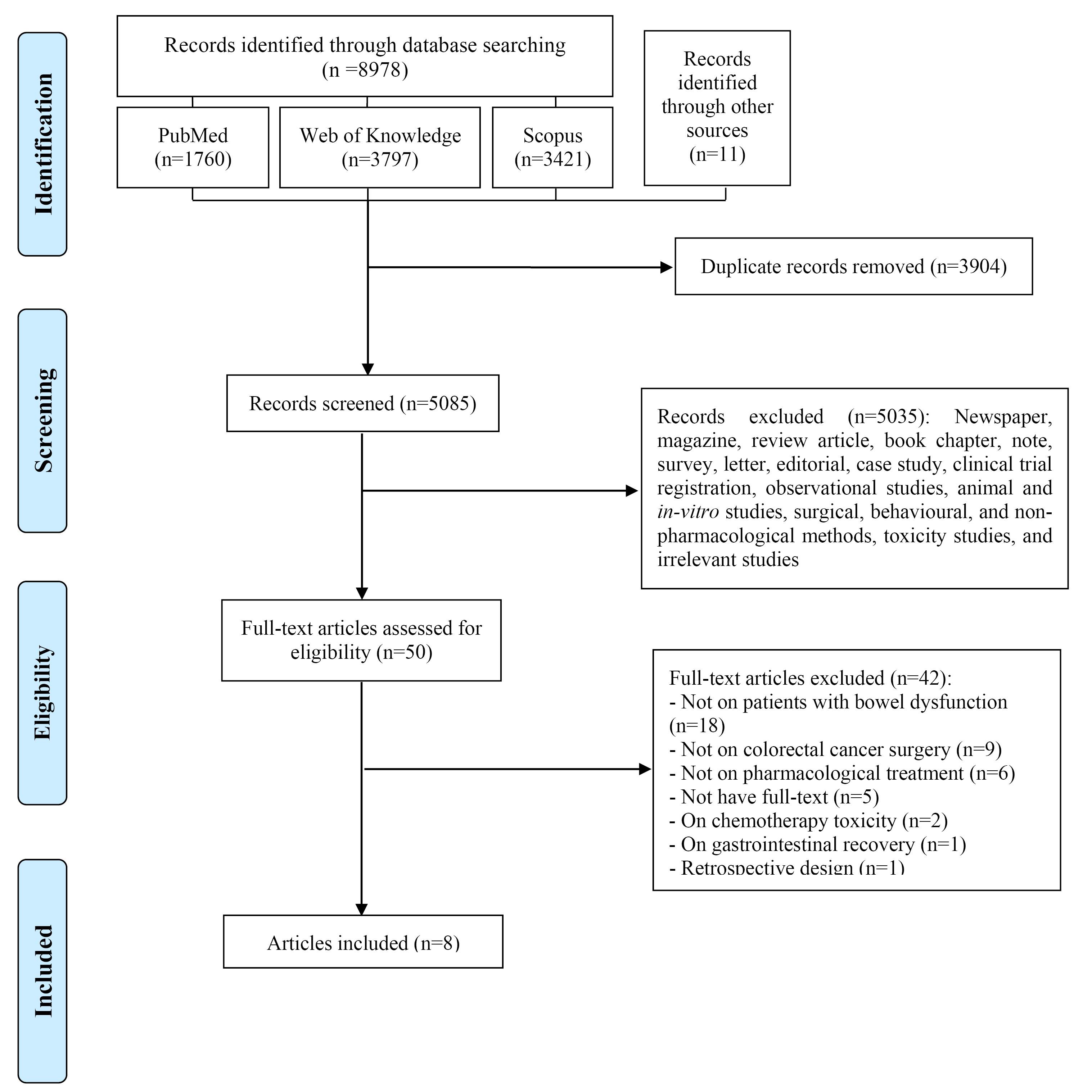
Figure 1.
Study Selection Process
.
Study Selection Process
Study Characteristics
As reported in Table 2, the included studies were conducted between 200214 and 2024.15 Among them, three studies were conducted in Japan,14,16,17 two in South Korea,18,19 and one each in France,20 China,21 and Switzerland.15 Three of the included studies were parallel RCT,18,19,21 two were crossover RCT,15,17 and three were single-arm trials.14,16,20 The control group in the included RCTs received placebo,15,18 conservative treatments (Kegel and warm sitz baths),19 loperamide,21 or no treatment.17 In the RCT study by Popeskou et al., similar percentages of patients were under loperamide treatment in both groups.15 Four of the included studies focused exclusively on men,14,16,17,19 while the others included both men and women. The analyzed sample sizes of the included studies ranged from 514 to 9819 participants. With the exception of two studies that enrolled a heterogeneous population (including patients who underwent surgery for rectal cancer [ > 67% of participants] or benign diseases)16,20, the remaining studies exclusively involved patients with cancer. Two studies addressed colon and rectosigmoid cancers,17,21 while the others were on rectal cancer. Studies were on patients with bowel dysfunction at least two weeks post-surgery.21 Three studies investigated serotonin (5-hydroxytryptamine [5-HT]) 3 receptor antagonists (ramosetron or ondansetron),15,16,19 two evaluated traditional herbal medicines,17,21 one assessed diazepam,14 one evaluated Botulinum A toxin,20 and one examined topical phenylephrine.18
Postoperative bowel function was evaluated using several assessment tools, including the LARS score,15,19 Wexner score,14,16,20 Vaizey score,15 fecal incontinence severity index,18 traditional Chinese medicine (TCM) syndrome score,21 Miller’s score,14 Kirwan’s score,14 and/or gastrointestinal symptom rating scale.17 Additionally, three studies employed self-developed questionnaires in this regard.16,19 Anorectal manometry was assessed in three of the included studies.14,18,20 Quality of life also was evaluated in four studies using the European Organization for Research and Treatment of Cancer Quality-of-Life Questionnaire Core 30 (EORTC QLQ-C30),19 the irritable bowel syndrome quality of life (IBS-QOL),15 and/or fecal incontinence quality of life.18,20
Risk of Bias Assessment
The results of the risk of bias assessment for the included RCTs are presented in Figure 2A. Only two of the included studies employed a double-blind design. Furthermore, two studies did not have a registered protocol identifier, and one study lacked clarity regarding the assessment of intervention compliance.
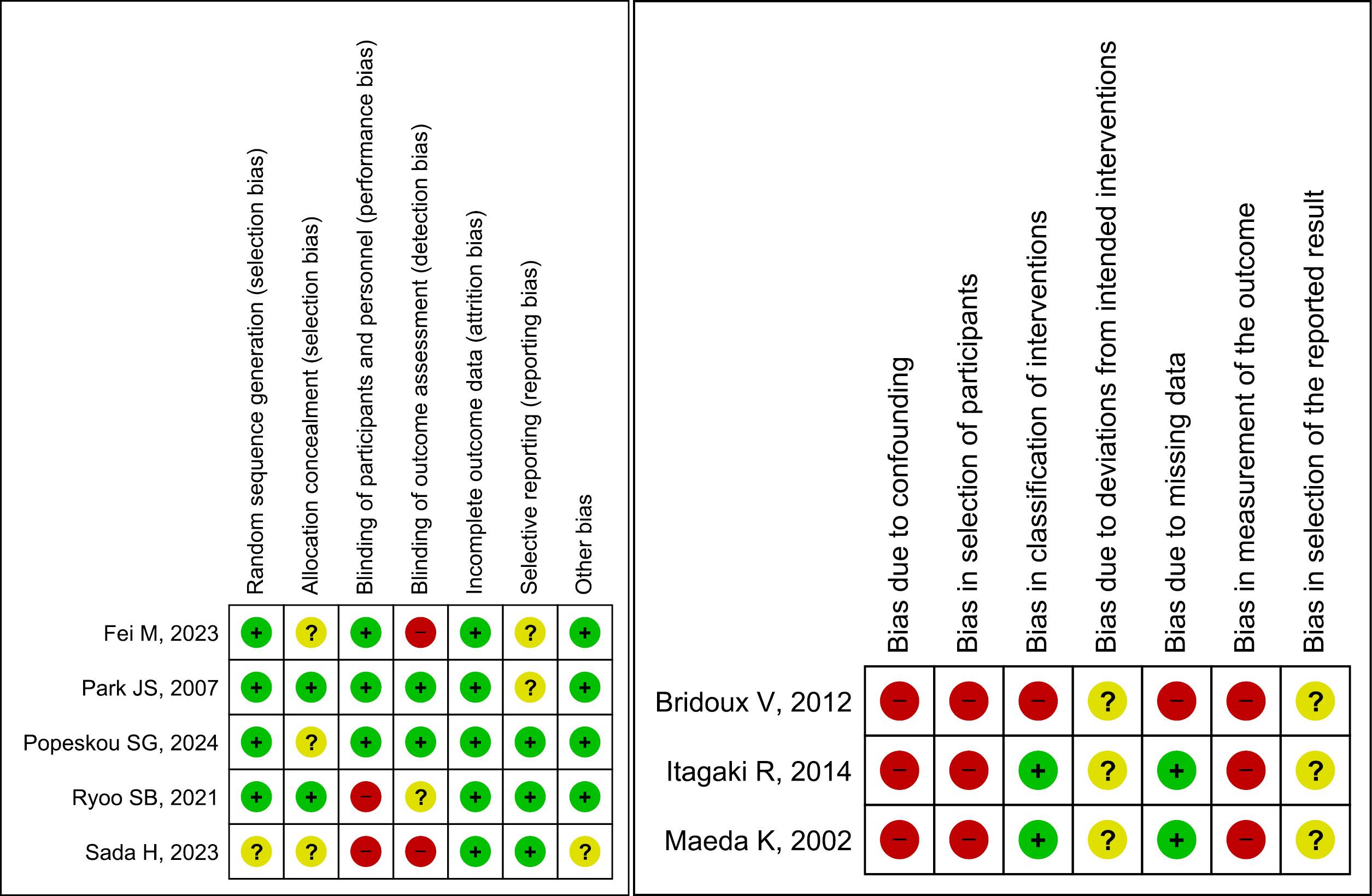
Figure 2.
Risk of bias assessment of the included randomized controlled trials (A) and single-arm studies (B)
.
Risk of bias assessment of the included randomized controlled trials (A) and single-arm studies (B)
As depicted in Figure 2B, all included single-arm studies were assessed to be at a critical risk for selection bias and did not adequately account for confounders. In the study by Bridoux et al., the intervention was not uniform across all included patients and was determined by the outcomes reported.20 Furthermore, there were unaddressed missing data in this study. Although the methods of outcome assessment were comparable across patients in all three studies, the outcomes were subjective and may have been influenced by the non-blinded study design. Additionally, none of the studies had a priori protocols.
Outcomes
5-HT3 Receptor Antagonists
Serotonin is a neurotransmitter that triggers nausea and vomiting by binding to the 5-HT3 receptors located on the gastrointestinal vagal nerve terminals, as well as the chemoreceptor trigger zone in the brain.22 The 5-HT3 receptor antagonists are US Food and Drug Administration (FDA)-approved antiemetic medications.22 Three of the studies included in this review assessed the effects of these agents on patients with bowel dysfunction following CRC surgeries and reported beneficial outcomes. Popeskou et al. conducted a crossover RCT to evaluate the effects of ondansetron on patients with minor or major LARS who had undergone surgery between 4 weeks and 2 years prior. They reported improvements in both the LARS score (Cohen’s d in the first period = -0.7, medium effect) and incontinence (Cohen’s d in the first period = -1.5, large effect) among patients treated with ondansetron compared to those receiving a placebo.15 However, an incomplete mixed model analysis was conducted in this study.23 The effects of administering 5 µg/day of ramosetron for 4 weeks also were investigated in males through one RCT and one single-arm trial involving patients with bowel dysfunction after colorectal surgeries. The findings indicated improvements in the LARS score, as well as reductions in fecal incontinence, urgency, and diarrhea, and enhancements in appetite, global health, and emotional and social functioning.16,19 In the RCT by Ryoo et al., the effect sizes were large for the LARS score (Cohen’s d = -1.0) and medium for bowel frequency (Cohen’s d = -0.7).
Botulinum A Toxin
Botulinum toxin belongs to the category of neurotoxic medications that possess both therapeutic and cosmetic effects.24 One of the studies included in this review evaluated the effects of intrarectal submucosal injection of botulinum toxin type A in six patients suffering from severe fecal incontinence related to overactive rectal contractions; four of these patients had a history of proctectomy for rectal cancer with neoadjuvant chemoradiotherapy, which occurred 8 months to 5 years prior. The injections were administered in a semicircumferential pattern, beginning 1 cm above the coloanal anastomosis, with additional injections performed 5 cm and 10 cm more proximally, resulting in a total dose of 500 units. A second series of injections was conducted within 1 to 6 months following the initial intervention, if improvement was not observed. The study reported significant improvements in fecal incontinence, quality of life, and rectal contractile activity.20
Phenylephrine
Phenylephrine is an alpha-1 adrenergic receptor agonist that is approved by the FDA for intravenous use in elevating blood pressure in adults with clinical hypotension. Additionally, its topical formulation is available as an over-the-counter medication for patients with hemorrhoids.25 One of the included RCTs evaluated the effects of phenylephrine administered topically to the anal margin in patients experiencing uncontrollable incontinence for at least six months following LAR surgery or ileostomy closure. The study found no significant effects of four weeks of phenylephrine treatment on incontinence, quality of life, or anorectal manometry.18
Diazepam
Diazepam is an FDA-approved benzodiazepine medication primarily recognized for its anxiolytic, sedative, and muscle relaxant properties.26 The earliest study included in this review evaluated the effects of 2 mg/day of diazepam administered over three months to five patients experiencing persistent mild to moderate incontinence following LAR surgery. The patients included in this study did not exhibit symptoms of anxiety or depression in the enrollment phase or during the trial. In this single-arm study, subjective fecal incontinence symptoms improved significantly from baseline, with a mean reduction of 10.25 units; however, anorectal manometry measurements showed no significant change. Notable improvement began within the first week of the intervention. Furthermore, the recto-anal inhibitory reflex appeared in two cases after the intervention.14
Traditional Japanese and Chinese Herbal Medicine
Daikenchuto (DKT) is a traditional Japanese herbal medicine that consists of processed ginger (Zingiberis Processum Rhizoma), ginseng (Panax ginseng), and Japanese pepper (Zanthoxylum fruit).27 One of the included studies assessed the effects of 15 g/day of DKT on patients complaining of difficult defecation, diarrhea, soft stools, and a feeling of unsatisfactory defecation following surgery for colon and rectosigmoid cancer. This crossover RCT reported improvements in diarrhea and indigestion.17
In another RCT, Baizhu Shaoyao San, a traditional Chinese herbal formula, was administered to patients with recurrent diarrhea following CRC surgeries. In this study, different modified formulations of Baizhu Shaoyao San were provided based on each patient’s symptoms in addition to diarrhea. The study evaluated the TCM Syndrome Score (which includes stool characteristics, stool frequency, bowel swelling, abdominal pain, abdominal distension, poor appetite, thirst, fatigue, and belching), symptomatic efficacy, and plasma levels of motilin and gastrin. Patients who received Baizhu Shaoyao San demonstrated greater improvements in the TCM Syndrome Score, clinical signs and symptoms of diarrhea, and levels of motilin (Cohen’s d = -0.8) and gastrin (Cohen’s d = -0.7) compared to those who received loperamide (as the control group).21
Discussion
The increasing survival rate of CRC patients following surgery underscores the need to enhance quality of life. Bowel dysfunction, characterized by symptoms such as fecal incontinence, constipation, diarrhea, and urgency, is a disabling and long-lasting complication that often occurs after CRC surgeries, significantly affecting patients’ well-being.28,29 Pharmacological treatments are considered first-line strategies due to their relative affordability and accessibility, particularly in low- and middle-income countries where access to rehabilitative care and advanced surgical techniques is often limited. Furthermore, traditional medicine can serve as culturally acceptable and cost-effective alternatives in these contexts. To date, there are no Food and Drug Administration (FDA)-approved drugs specifically indicated for the treatment of LARS. Antidiarrheal agents, most commonly loperamide, are considered the first-line treatment for LARS; however, their clinical efficacy has primarily been evaluated in the management of diarrhea and fecal incontinence arising from conditions other than CRC resections.30
In this systematic review, we assessed the available literature on the effects of pharmacological treatments for patients suffering from persistent bowel dysfunction after CRC surgeries. Previous studies have investigated the effects of oral 5-HT3 receptor antagonists, diazepam, traditional Japanese and Chinese herbal medicines (DKT and modified Baizhu Shaoyao San), as well as botulinum toxin type A injection and topical phenylephrine. With the exception of topical phenylephrine, the other treatments demonstrated promising effects. However, most of the included studies had significant methodological limitations, such as the absence of control groups, lack of blinding, small sample sizes, low statistical power, short intervention durations, and heterogeneous patient populations. Furthermore, due to the limited number of studies for each intervention, conducting a meta-analysis was not feasible. For these reasons, definitive conclusions cannot be drawn. Therefore, despite the promising results observed in the reviewed studies, significant gaps in research remain.
The improvement of key symptoms associated with LARS, including incontinence, urgency, and increased stool frequency, as well as the resultant emotional and social challenges,31 was documented with the use of 5-HT3 receptor antagonists.15,16,19 These agents have also been reported to assist in the management of patients with diarrhea-predominant IBS (IBS-D), who experience more frequent defecation, shorter colonic transit times, and urgency32 as well as those suffering from diabetic diarrhea.33 Several mechanisms may underlie the observed effects of these agents on bowel dysfunction following CRC surgeries. Serotonin has been shown to increase colonic contractions in response to mechanical stretching caused by a stool pellet through the 5-HT3 receptor.34 Additionally, stress and anxiety, which are often associated with exacerbated LARS,35 have been reported to stimulate colonic transit, motility, and hypersensitivity through the release of serotonin.36 These actions can be inhibited by 5-HT3 receptor antagonists.32 Furthermore, the inhibitory effects of 5-HT3 receptor antagonists on gut motility persisted even after the depletion of intestinal 5-HT3 receptors, suggesting that these agents may also interact with non-serotonergic pathways.37 However, due to the limited availability of high-quality RCTs, further large-scale studies are warranted to elucidate the role of 5-HT3 receptor antagonists on LARS following CRC surgeries and their related mechanisms in this context.
According to the World Health Organization (WHO), approximately half of the population in several industrialized countries regularly used traditional and complementary medicine in 2012.38 Multiple studies assessed the effects of various traditional herbal medicines on CRC and benign gastrointestinal disorders.39,40 One included study reported that DKT, a traditional Japanese herbal medicine, improves diarrhea and indigestion following surgery for colon and rectosigmoid cancer.17 Furthermore, a previous observational study evaluated the effects of DKT on patients with fecal incontinence or anal sphincter dysfunction. This study reported improvements in fecal incontinence, stool consistency, and maximum resting and squeezing anal pressure.41 However, the available data regarding this matter are controversial42 and warrant further investigation. The beneficial effects of DKT on fecal incontinence may be related to its impact on the contraction of smooth muscle cells in the internal anal sphincter and the gastrointestinal tract. Additionally, DKT has been reported to modulate gut microbiota,43 which could significantly enhance bowel function following CRC surgeries. Besides DKT, ginger and ginseng—two of its ingredients—have shown promising effects in reducing intestinal hypersensitivity and managing IBS-related bowel dysfunction.44-46 These findings warrant further investigation in the context of CRC surgeries. Baizhu Shaoyao San—a traditional formula composed of Atractylodis Macrocephalae Rhizoma, Paeoniae Radix Alba, Citri Reticulatae Pericarpium, and Saposhnikoviae Radix—has demonstrated efficacy in managing diarrheal conditions, including ulcerative colitis and IBS-D. It also has been shown to significantly reduce stool frequency in patients following CRC resections.21 Furthermore, circulating levels of motilin and gastrin, both of which play physiological roles in diarrhea,47,48 were also reduced in patients treated with Baizhu Shaoyao San. In addition to traditional herbal medicine, several other studies have evaluated the effects of other complementary and alternative medicine practices, such as acupuncture, on LARS scores following CRC surgeries.49 However, the current study did not aim to include these interventions. The literature on this area is currently limited, necessitating further exploration in future research.
In the present systematic review, we included only studies focusing on patients who suffered from bowel dysfunction following CRC surgeries. However, some other research has investigated the effects of various agents on the prevention of bowel dysfunction after CRC surgeries or on surgeries indicated for reasons other than cancer.50 For instance, in the RCT conducted by Park et al., multi-strain probiotics were administered to patients undergoing anterior resection for sigmoid colon cancer over a period of four weeks, commencing one week prior to surgery. The probiotics utilized in this study comprised a combination of three strains: Bifidobacterium animalis subsp. lactis HY8002, Lacticaseibacillus casei HY2782, and Lactiplantibacillus plantarum HY7712. The study reported improvements in flatus control and microbiota composition.51 Conversely, another study found no significant effect of administering Lactobacillus plantarum one day preoperatively and three weeks postoperatively on the incidence of LARS and quality of life.52 Given the conflicting evidence, further research is warranted to explore the effects of probiotics on the prevention and management of LARS following CRC surgeries.
Most drug absorption occurs in the small intestine; therefore, it is unlikely to be significantly altered in the long term by CRC resections. However, due to changes in gastrointestinal anatomy and physiology, altered colonic transit time, shifts in the colonic microbiome, and modifications in hepatic and renal function secondary to surgery-induced physiological stress, the metabolism and efficacy of drugs may be affected.53 Currently, there is insufficient data regarding how CRC resections specifically influence the pharmacokinetic properties of the medications discussed in this review or the interactions between drugs and herbs. Future studies are warranted to better elucidate these alterations and to optimize pharmacotherapy in post-surgical CRC patients.
This study has several limitations. The primary limitation is the high risk of bias in most included studies, largely due to a lack of blinding and the absence of control groups. These methodological shortcomings increase the risk of performance, detection, and selection bias. Furthermore, considerable heterogeneity across the studies precluded a quantitative meta-analysis. Consequently, the findings should be interpreted with caution, and they underscore the necessity for more rigorously designed trials.
Conclusion
In conclusion, this systematic review identified preliminary but promising evidence supporting the efficacy of several pharmacological interventions—notably 5-HT3 receptor antagonists, specific herbal formulations, botulinum toxin A, and diazepam—in managing bowel dysfunction following CRC surgery. However, the current evidence is limited by a scarcity of robust studies. Consequently, large-scale, long-term, double-blind, placebo-controlled RCTs are urgently needed to establish therapeutic efficacy and generate robust evidence for clinical practice. Future research should prioritize these agents to validate preliminary findings, clarify mechanisms of action, and explore potential herb–drug interactions. Cost-effectiveness should also be assessed, particularly in low- and middle-income countries where they could represent an accessible first-line strategy.
Competing Interests
None.
Data Availability Statement
Data are available from the first authors with reasonable request.
Ethical Approval
The protocol of this study was approved by the Ethical Committee of Shiraz University of Medical Sciences (IR.SUMS.MED.REC.1403.635).
Supplementary File
Table S1. PubMed search strategy Table S2. Studies excluded in the full-text level
(pdf)
Acknowledgements
The present study is extracted from the thesis of Dr. S.M.E.
References
- Ferlay J, Ervik M, Lam F, Laversanne M, Colombet M, Mery L, et al. Global Cancer Observatory: Cancer Today. Lyon, France: International Agency for Research on Cancer; 2024. Available from: https://gco.iarc.who.int/today. Accessed September 12, 2025.
- Zheng K, Hu Q, Yu G, Zhou L, Yao Y, Zhou Y. Trends of sphincter-preserving surgeries for low lying rectal cancer: a 20-year experience in China. Front Oncol 2022; 12:996866. doi: 10.3389/fonc.2022.996866 [Crossref] [ Google Scholar]
- Croese AD, Lonie JM, Trollope AF, Vangaveti VN, Ho YH. A meta-analysis of the prevalence of Low Anterior Resection Syndrome and systematic review of risk factors. Int J Surg 2018; 56:234-41. doi: 10.1016/j.ijsu.2018.06.031 [Crossref] [ Google Scholar]
- Sandberg SJ, Park JM, Tasselius VA, Angenete E. Bowel dysfunction after colon cancer surgery: a prospective, longitudinal, multicenter study. Dis Colon Rectum 2024; 67(10):1322-31. doi: 10.1097/dcr.0000000000003358 [Crossref] [ Google Scholar]
- Troller R, Meyer J, Davies MJ. Defining low anterior resection syndrome (LARS): scoring tools and patient-reported outcomes. Semin Colon Rectal Surg 2021; 32(4):100847. doi: 10.1016/j.scrs.2021.100847 [Crossref] [ Google Scholar]
- Xie P, Wu S, Kuo Z, Tian H, He Q, Li Y. Association of modifiable lifestyle with colorectal cancer incidence and mortality according to metabolic status: prospective cohort study. Front Oncol 2023; 13:1162221. doi: 10.3389/fonc.2023.1162221 [Crossref] [ Google Scholar]
- Garfinkle R, Ky A, Singh A, Morin N, Ghitulescu G, Faria J. Financial and occupational impact of low anterior resection syndrome in rectal cancer survivors. Colorectal Dis 2021; 23(7):1777-84. doi: 10.1111/codi.15633 [Crossref] [ Google Scholar]
- Verkuijl SJ, Furnée EJB, Kelder W, Hoff C, Hess DA, Wit F. Long-term bowel dysfunction and decline in quality of life following surgery for colon cancer: call for personalized screening and treatment. Dis Colon Rectum 2022; 65(12):1531-41. doi: 10.1097/dcr.0000000000002377 [Crossref] [ Google Scholar]
- Rosen H, Sebesta CG, Sebesta C. Management of low anterior resection syndrome (LARS) following resection for rectal cancer. Cancers (Basel) 2023; 15(3):778. doi: 10.3390/cancers15030778 [Crossref] [ Google Scholar]
- Ansar M, Boddeti S, Noor K, Malireddi A, Abera M, Suresh SB. A systematic review of comparative effectiveness of interventions for low anterior resection syndrome: impacts on bowel function and quality of life. Cureus 2024; 16(10):e72772. doi: 10.7759/cureus.72772 [Crossref] [ Google Scholar]
- Emile SH, Garoufalia Z, Barsom S, Horesh N, Gefen R, Zhou P. Systematic review and meta-analysis of randomized clinical trials on the treatment of low anterior resection syndrome. Surgery 2023; 173(6):1352-8. doi: 10.1016/j.surg.2023.02.010 [Crossref] [ Google Scholar]
- Higgins JJCC, Wiley J, Ltd S. Cochrane Handbook for Systematic Reviews of Interventions. John Wiley & Sons; 2008.
- Sterne JA, Hernán MA, Reeves BC, Savović J, Berkman ND, Viswanathan M. ROBINS-I: a tool for assessing risk of bias in non-randomised studies of interventions. BMJ 2016; 355:i4919. doi: 10.1136/bmj.i4919 [Crossref] [ Google Scholar]
- Maeda K, Maruta M, Sato H, Masumori K, Matsumoto M. Effect of oral diazepam on anal continence after low anterior resection: a preliminary study. Tech Coloproctol 2002; 6(1):15-8. doi: 10.1007/s101510200002 [Crossref] [ Google Scholar]
- Popeskou SG, Roesel R, Faes S, Vanoni A, Galafassi J, di Tor Vajana AF. Ondansetron for low anterior resection syndrome (lars): a double-blind, placebo-controlled, cross-over, randomized study. Ann Surg 2024; 279(2):196-202. doi: 10.1097/sla.0000000000005995 [Crossref] [ Google Scholar]
- Itagaki R, Koda K, Yamazaki M, Shuto K, Kosugi C, Hirano A. Serotonin (5-HT3) receptor antagonists for the reduction of symptoms of low anterior resection syndrome. Clin Exp Gastroenterol 2014; 7:47-52. doi: 10.2147/ceg.S55410 [Crossref] [ Google Scholar]
- Sada H, Sawada H, Tokunaga M, Shimomura M, Egi H, Hattori M. Clinical efficacy of daikenchuto (DKT: TJ-100) for gastrointestinal symptoms in patients with a history of colon and rectosigmoid cancer surgery: a randomized crossover study. Surg Today 2023; 53(8):873-81. doi: 10.1007/s00595-022-02640-2 [Crossref] [ Google Scholar]
- Park JS, Kang SB, Kim DW, Namgung HW, Kim HL. The efficacy and adverse effects of topical phenylephrine for anal incontinence after low anterior resection in patients with rectal cancer. Int J Colorectal Dis 2007; 22(11):1319-24. doi: 10.1007/s00384-007-0335-6 [Crossref] [ Google Scholar]
- Ryoo SB, Park JW, Lee DW, Lee MA, Kwon YH, Kim MJ. Anterior resection syndrome: a randomized clinical trial of a 5-HT3 receptor antagonist (ramosetron) in male patients with rectal cancer. Br J Surg 2021; 108(6):644-51. doi: 10.1093/bjs/znab071 [Crossref] [ Google Scholar]
- Bridoux V, Gourcerol G, Kianifard B, Touchais JY, Ducrotte P, Leroi AM. Botulinum A toxin as a treatment for overactive rectum with associated faecal incontinence. Colorectal Dis 2012; 14(3):342-8. doi: 10.1111/j.1463-1318.2011.02585.x [Crossref] [ Google Scholar]
- Fei M, Zhang J, Zhu C, Luo M, Zhang L, Wu Y. Effects of modified Baizhu Shaoyao San on postoperative diarrhea in colorectal cancer patients: a single-blind, randomized controlled trial. Complement Med Res 2023; 30(1):37-44. doi: 10.1159/000527706 [Crossref] [ Google Scholar]
- Theriot J, Wermuth HR, Ashurst JV. Antiemetics, selective 5-HT3 antagonists. In: StatPearls [Internet]. Treasure Island, FL: StatPearls Publishing; 2026. Available from: https://www.ncbi.nlm.nih.gov/books/NBK513318/. Updated April 19, 2024. Accessed January 2024.
- Lim CY, In J. Considerations for crossover design in clinical study. Korean J Anesthesiol 2021; 74(4):293-9. doi: 10.4097/kja.21165 [Crossref] [ Google Scholar]
- Padda IS, Tadi P. Botulinum toxin. In: StatPearls [Internet]. Treasure Island, FL: StatPearls Publishing; 2026. Available from: https://www.ncbi.nlm.nih.gov/books/NBK557387/. Updated November 6, 2023. Accessed January 2025.
- Richards E, Lopez MJ, Maani CV. Phenylephrine. In: StatPearls [Internet]. Treasure Island, FL: StatPearls Publishing; 2026. Available from: https://www.ncbi.nlm.nih.gov/books/NBK534801/. Updated 2023 October 30, 2023. Accessed January 2025.
- Dhaliwal JS, Rosani A, Saadabadi A. Diazepam. In: StatPearls [Internet]. Treasure Island, FL: StatPearls Publishing; 2026. Available from: https://www.ncbi.nlm.nih.gov/books/NBK537022/. Updated August 28, 2023. Accessed January 2025.
- Ishizuka M, Shibuya N, Nagata H, Takagi K, Iwasaki Y, Hachiya H. Perioperative administration of traditional Japanese herbal medicine daikenchuto relieves postoperative ileus in patients undergoing surgery for gastrointestinal cancer: a systematic review and meta-analysis. Anticancer Res 2017; 37(11):5967-74. doi: 10.21873/anticanres.12043 [Crossref] [ Google Scholar]
- Verkuijl SJ, Jonker JE, Trzpis M, Burgerhof JGM, Broens PMA, Furnée EJB. Functional outcomes of surgery for colon cancer: a systematic review and meta-analysis. Eur J Surg Oncol 2021; 47(5):960-9. doi: 10.1016/j.ejso.2020.11.136 [Crossref] [ Google Scholar]
- Mokarram P, Zamani M, Kavousipour S, Naghibalhossaini F, Irajie C, Moradi Sarabi M. Different patterns of DNA methylation of the two distinct O6-methylguanine-DNA methyltransferase (O6-MGMT) promoter regions in colorectal cancer. Mol Biol Rep 2013; 40(5):3851-7. doi: 10.1007/s11033-012-2465-3 [Crossref] [ Google Scholar]
- Zhang R, Luo W, Qiu Y, Chen F, Luo D, Yang Y. Clinical management of low anterior resection syndrome: review of the current diagnosis and treatment. Cancers (Basel) 2023; 15(20):5011. doi: 10.3390/cancers15205011 [Crossref] [ Google Scholar]
- Keane C, Fearnhead NS, Bordeianou LG, Christensen P, Basany EE, Laurberg S. International consensus definition of low anterior resection syndrome. Dis Colon Rectum 2020; 63(3):274-84. doi: 10.1097/dcr.0000000000001583 [Crossref] [ Google Scholar]
- Spiller RC. Targeting the 5-HT3 receptor in the treatment of irritable bowel syndrome. Curr Opin Pharmacol 2011; 11(1):68-74. doi: 10.1016/j.coph.2011.02.005 [Crossref] [ Google Scholar]
- Murao S, Hosokawa H. Serotonin 5-HT3 receptor antagonist for treatment of severe diabetic diarrhea. Diabetes Care 2010; 33(3):e38. doi: 10.2337/dc09-2131 [Crossref] [ Google Scholar]
- Gershon MD. Review article: serotonin receptors and transporters--roles in normal and abnormal gastrointestinal motility. Aliment Pharmacol Ther 2004; 20 Suppl 7:3-14. doi: 10.1111/j.1365-2036.2004.02180.x [Crossref] [ Google Scholar]
- Chiang TY, Hsu YJ, Chern YJ, Liao CK, Tsai WS, Hsieh PS. Association between personality types and low anterior resection syndrome in rectal cancer patients following surgery. Cancer Med 2024; 13(3):e7022. doi: 10.1002/cam4.7022 [Crossref] [ Google Scholar]
- Nakade Y, Fukuda H, Iwa M, Tsukamoto K, Yanagi H, Yamamura T. Restraint stress stimulates colonic motility via central corticotropin-releasing factor and peripheral 5-HT3 receptors in conscious rats. Am J Physiol Gastrointest Liver Physiol 2007; 292(4):G1037-44. doi: 10.1152/ajpgi.00419.2006 [Crossref] [ Google Scholar]
- Spencer NJ. Constitutively active 5-HT receptors: an explanation of how 5-HT antagonists inhibit gut motility in species where 5-HT is not an enteric neurotransmitter?. Front Cell Neurosci 2015; 9:487. doi: 10.3389/fncel.2015.00487 [Crossref] [ Google Scholar]
- World Health Organization (WHO). Traditional Medicine. WHO; 2023. Available from: https://www.who.int/news-room/questions-and-answers/item/traditional-medicine.
- Tan N, Gwee KA, Tack J, Zhang M, Li Y, Chen M. Herbal medicine in the treatment of functional gastrointestinal disorders: a systematic review with meta-analysis. J Gastroenterol Hepatol 2020; 35(4):544-56. doi: 10.1111/jgh.14905 [Crossref] [ Google Scholar]
- Sun J, Wei Y, Wang J, Hou M, Su L. Treatment of colorectal cancer by traditional Chinese medicine: prevention and treatment mechanisms. Front Pharmacol 2024; 15:1377592. doi: 10.3389/fphar.2024.1377592 [Crossref] [ Google Scholar]
- Abe T, Kunimoto M, Hachiro Y, Ohara K, Murakami M. Clinical efficacy of Japanese herbal medicine daikenchuto in the management of fecal incontinence: a single-center, observational study. J Anus Rectum Colon 2019; 3(4):160-6. doi: 10.23922/jarc.2019-012 [Crossref] [ Google Scholar]
- Iturrino J, Camilleri M, Wong BS, Linker Nord SJ, Burton D, Zinsmeister AR. Randomised clinical trial: the effects of daikenchuto, TU-100, on gastrointestinal and colonic transit, anorectal and bowel function in female patients with functional constipation. Aliment Pharmacol Ther 2013; 37(8):776-85. doi: 10.1111/apt.12264 [Crossref] [ Google Scholar]
- Ozaka S, Sonoda A, Kudo Y, Ito K, Kamiyama N, Sachi N. Daikenchuto, a Japanese herbal medicine, ameliorates experimental colitis in a murine model by inducing secretory leukocyte protease inhibitor and modulating the gut microbiota. Front Immunol 2024; 15:1457562. doi: 10.3389/fimmu.2024.1457562 [Crossref] [ Google Scholar]
- Zhang C, Huang Y, Li P, Chen X, Liu F, Hou Q. Ginger relieves intestinal hypersensitivity of diarrhea predominant irritable bowel syndrome by inhibiting proinflammatory reaction. BMC Complement Med Ther 2020; 20(1):279. doi: 10.1186/s12906-020-03059-3 [Crossref] [ Google Scholar]
- Zhao L, Zhang T, Zhang K. Pharmacological effects of ginseng and ginsenosides on intestinal inflammation and the immune system. Front Immunol 2024; 15:1353614. doi: 10.3389/fimmu.2024.1353614 [Crossref] [ Google Scholar]
- Aregawi LG, Gebremeskel TG, Zoltan C. Preventive and therapeutic effects of ginger on bowel disease: a review of clinical trials. Pharmacol Res Mod Chin Med 2024; 12:100457. doi: 10.1016/j.prmcm.2024.100457 [Crossref] [ Google Scholar]
- Oberg K, Theodorsson-Norheim E, Norheim I. Motilin in plasma and tumor tissues from patients with the carcinoid syndrome Possible involvement in the increased frequency of bowel movements. Scand J Gastroenterol 1987; 22(9):1041-8. doi: 10.3109/00365528708991954 [Crossref] [ Google Scholar]
- Prosapio JG, Sankar P, Jialal I. Physiology, gastrin. In: StatPearls [Internet]. Treasure Island, FL: StatPearls Publishing; 2026. Available from: https://www.ncbi.nlm.nih.gov/books/NBK534822/. Updated April 6, 2023. Accessed January 2025.
- Dulskas A, Aukstikalnis T, Kavaliauskas P, Samalavicius NE. The role of traditional acupuncture in low anterior resection syndrome treatment: a pilot study. Dis Colon Rectum 2022; 65(1):93-9. doi: 10.1097/dcr.0000000000002060 [Crossref] [ Google Scholar]
- Bergman L, Djärv L. A comparative study of loperamide and diphenoxylate in the treatment of chronic diarrhoea caused by intestinal resection. Ann Clin Res 1981; 13(6):402-5. [ Google Scholar]
- Park IJ, Lee JH, Kye BH, Oh HK, Cho YB, Kim YT. Effects of probiotics on the symptoms and surgical outcomes after anterior resection of colon cancer (POSTCARE): a randomized, double-blind, placebo-controlled trial. J Clin Med 2020; 9(7):2181. doi: 10.3390/jcm9072181 [Crossref] [ Google Scholar]
- Yoon BJ, Oh HK, Lee J, Cho JR, Kim MJ, Kim DW. Effects of probiotics on bowel function restoration following ileostomy closure in rectal cancer patients: a randomized controlled trial. Colorectal Dis 2021; 23(4):901-10. doi: 10.1111/codi.15463 [Crossref] [ Google Scholar]
- Hua S, Lye EC. Impact of gastric and bowel surgery on gastrointestinal drug delivery. Drug Deliv Transl Res 2023; 13(1):37-53. doi: 10.1007/s13346-022-01179-6 [Crossref] [ Google Scholar]